Cinder Block Calculator
Concrete blocks for your wall, the mortar and core fill to go with them, and how many trips it takes to get them home.
Quick answer
A wall takes 1.125 standard 8 x 8 x 16 in blocks per square foot, about 113 per 100 sq ft. A 20 ft wall 4 ft high is 6 courses of 15, or 90 blocks, and about 7 bags of 80 lb mason mix at 13 blocks per bag. A standard block weighs about 37 lb.
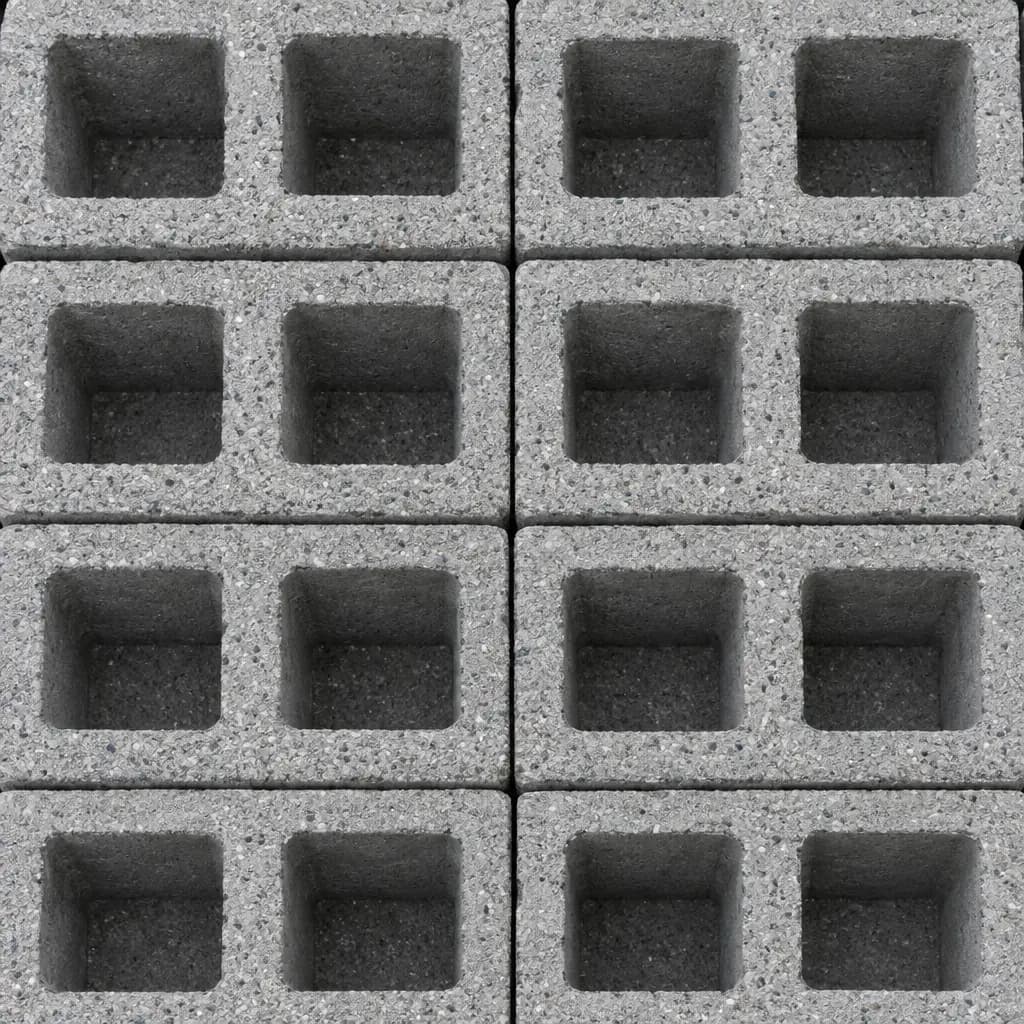
Measure the wall
- Wall 1
Above the footing
Doors, windows, gaps
Broken and cut blocks
Each wall is counted in 8 in courses of 16 in blocks, rounded up. Measuring a corner? Add the walls separately; the corner block is counted once per wall, which covers the extra cuts.
Block and core fill
Standard 8 in block, check your tag
95 blocks, 7 bags of mortar.
You need
95concrete blocks
7 bags of mortar · 1.3 pallets · about 4,075 lb
90 blocks laid for 80 sq ft of wall (6 courses of 15, 4 ft tall built), plus 5% extra for cuts and breakage.
HaulOnce order ticket
Block wall
Ticket no.
640565
Example price, enter yours
Example price
Ask your supplier
Estimate from haulonce.com. Weights vary with moisture and supplier. Prices are examples unless you entered your own.
Haul Check
Typical 1,150 to 2,400 lb. We use the low end until you enter yours.
Check the Tire and Loading Information sticker on your driver's door jamb for your exact payload.
That is 2,925 lb over your payload. Plan on 4 trips of about 1,019 lb.
At this many trips, ask the yard what delivery costs. It is often less than your time and fuel.
Using the low end of the typical payload range. Enter your own for an exact answer.
The footing comes first
What pros know
- Plan the wall in 8 inch courses and 16 inch block lengths. Matching the layout to the block saves cutting. Source
- An 80 lb bag of mason mix lays about 13 standard blocks. Mix only what you can lay before it stiffens. Source
- Filling cores takes far more material than the mortar: one 80 lb bag of core-fill grout fills about 3 blocks. Source
- A pallet of standard block can weigh well over a ton, so most block orders are a delivery.
Ready to text or email your supplier:
“Block order: 95 standard 8 x 8 x 16 in concrete blocks, 7 bags of 80 lb mason mix. Please confirm the pallet count and delivery.”
How many blocks do I need?
A standard block is sold as 8 x 8 x 16 inches, but the block itself measures 7-5/8 x 7-5/8 x 15-5/8. The missing 3/8 inch is the mortar joint, so in the wall each block takes up exactly 8 x 16 inches. That makes the math simple: every 8 inches of height is a course, and every 16 inches of length is a block.
Divide the wall height in inches by 8 and round up for the courses. Divide the length in inches by 16 and round up for the blocks in each course. Multiply. Over a big flat wall that works out to 1.125 blocks per square foot. Then add about 5 percent for cuts and breakage. The 4, 6, 10, and 12 inch widths have the same 8 x 16 face, so the count is the same; only the weight and the core fill change.
Blocks for common wall sizes
| Wall height | Courses | 10 ft long | 20 ft long | 30 ft long | 50 ft long |
|---|---|---|---|---|---|
| 2 ft | 3 | 24 | 45 | 69 | 114 |
| 3 ft | 5 | 40 | 75 | 115 | 190 |
| 4 ft | 6 | 48 | 90 | 138 | 228 |
| 6 ft | 9 | 72 | 135 | 207 | 342 |
| 8 ft | 12 | 96 | 180 | 276 | 456 |
Mortar and core fill
QUIKRETE's data sheet says one 80 lb bag of Mason Mix lays up to 13 standard blocks. Call it one bag for every 13 blocks and round up; a beginner's joints run thicker, so an extra bag is cheap insurance.
Filling the cores is a different scale. One 80 lb bag of QUIKRETE Core-Fill Grout fills the cores of only about 3 standard 8 inch blocks, so a fully grouted wall takes about four times as many bags as the mortar. Retaining and structural walls often fill only the cells with rebar; your plans or local code say which. For a large grouted wall, ask about bulk grout or ready-mix.
How much does a cinder block weigh?
A standard normal-weight 8 x 8 x 16 block weighs about 37 lb; that is one block maker's listing, and others run a few pounds either way. Lightweight block is made with lighter aggregate: ASTM classes blocks by the concrete's density, with normal weight at 125 lb per cubic foot and up and lightweight under 105. Thinner blocks weigh less and 10 and 12 inch blocks more. The weight is usually on the tag or the supplier's spec sheet, and the calculator lets you enter it.
A pallet of 75 standard blocks is about 2,775 lb of block alone. Add 80 lb for each bag of mortar or grout.
Hauling block home
Block is the heaviest thing most people try to fit in a pickup. A half-ton with a 1,150 lb payload carries about 31 standard blocks, and that is with nobody in the passenger seat. A full pallet (2,775 lb) is more than any half-ton payload (1,150 to 2,400 lb). The Haul Check above counts the trips; past two or three, delivery with a forklift or boom truck is usually worth it.
Before the first course
A block wall sits on a poured concrete footing, set below the frost line in cold climates. Work out its concrete with the footing option in the concrete calculator, and check local code for footing size, rebar, and when a wall needs a permit or an engineer. Tall and retaining walls almost always do.
What pros know
- Plan the wall in 8 inch courses and 16 inch block lengths. Matching the layout to the block saves cutting. (Ernest Maier (block producer))
- An 80 lb bag of mason mix lays about 13 standard blocks. Mix only what you can lay before it stiffens. (QUIKRETE)
- Filling cores takes far more material than the mortar: one 80 lb bag of core-fill grout fills about 3 blocks. (QUIKRETE)
- A pallet of standard block can weigh well over a ton, so most block orders are a delivery.
Common mistakes
- Laying out the wall on odd lengths. Plan in 16 inch steps and you avoid cutting a block in every course.
- Forgetting the core fill. It is heavier and more bags than the mortar.
- Not checking where the courses land. Courses come in 8 inch steps, so a wall planned at 3 ft is built at 3 ft 4 in or 2 ft 8 in.
- Loading a pallet of block into a half-ton pickup.
- Skipping the footing, or setting it above the frost line.
Questions people ask
How many cinder blocks per square foot?
1.125 standard 8 x 16 in blocks per square foot of wall, or about 113 per 100 sq ft, including the mortar joints. Add about 5 percent for cuts.
How many blocks do I need for a 20 ft wall?
At 4 ft high, 90 blocks: 6 courses of 15. At 6 ft, 135. Add extra for cuts and breakage.
How much does a cinder block weigh?
About 37 lb for a standard normal-weight 8 x 8 x 16 block. Lightweight block weighs less, and the exact figure depends on the plant, so check the tag.
How many blocks does a bag of mortar lay?
About 13 standard blocks per 80 lb bag of QUIKRETE Mason Mix, according to its data sheet.
How many blocks are on a pallet?
It depends on the block maker. One producer lists 75 standard 8 x 8 x 16 blocks per pallet, about 2,775 lb. Ask your supplier for theirs.
Are cinder blocks and concrete blocks the same thing?
In everyday use, yes. "Cinder block" is the common name for a hollow concrete block, which the industry calls a concrete masonry unit, or CMU. The calculator works for either name.
Sources
- QUIKRETE, Mason Mix (No. 1136) data sheet: each 80 lb bag lays up to 37 standard bricks or 13 standard 8 x 8 x 16 in blocks
- QUIKRETE, Core-Fill Grout Fine (No. 1585-08) data sheet: each 80 lb bag yields about 0.68 cu ft and fills the cores of about 3 standard 8 x 8 x 16 in blocks
- Anchorage Sand & Gravel (block producer), Standard Block 8 x 8 x 16 product listing: 37 lb per block, 75 per pallet
- Ernest Maier (block producer), FAQ on Block: nominal versus actual dimensions (8 x 8 x 16 is 7-5/8 x 7-5/8 x 15-5/8 in) and ASTM weight classes
- NHTSA, Tires: the Tire and Loading Information placard on the driver's door jamb
Last reviewed: . How we calculate
Related calculators and projects
- Concrete CalculatorSlabs, footings, posts, columns, and steps: bags or ready-mix.
- Concrete Slab CalculatorYards and bags for a slab, plus the gravel base and rebar.
- Gravel CalculatorCubic yards, tons, bags, and truck trips for any gravel.
- Paver Base CalculatorCompacted paver base for patios, walks, and driveways.
- Board Foot CalculatorBoard feet, price, and weight for a lumber list, plus a truck check.
- Wood FencePosts, rails, pickets, and post concrete for a wood fence, priced per foot.